
No Sound, No Problem: Experiencing a Concert from a Deaf POV

Happy March everyone!

I’m excited that it’s March because being Irish is one of my most favorite things about life - it’s always so much fun to celebrate my heritage (but I celebrate year round!). This year, Flogging Molly came to town! They started their ‘Life Is Good’ tour at Foxwoods Casino. I had the time of my life! It brought back so many memories for me.

Growing up in an Irish family, my dad was a fan of Flogging Molly so it rubbed off onto me. People always got curious when I said that I liked a specific musician or a band because of my hearing loss. During my middle and high school years, I would learn the lyrics to any songs so that’s how I knew who I “like”. I never thought to listen to them but I started to in college after realizing that I could feel the bass and vibrations of the music when I went to few concerts. I can’t hear the words while the music is being played.
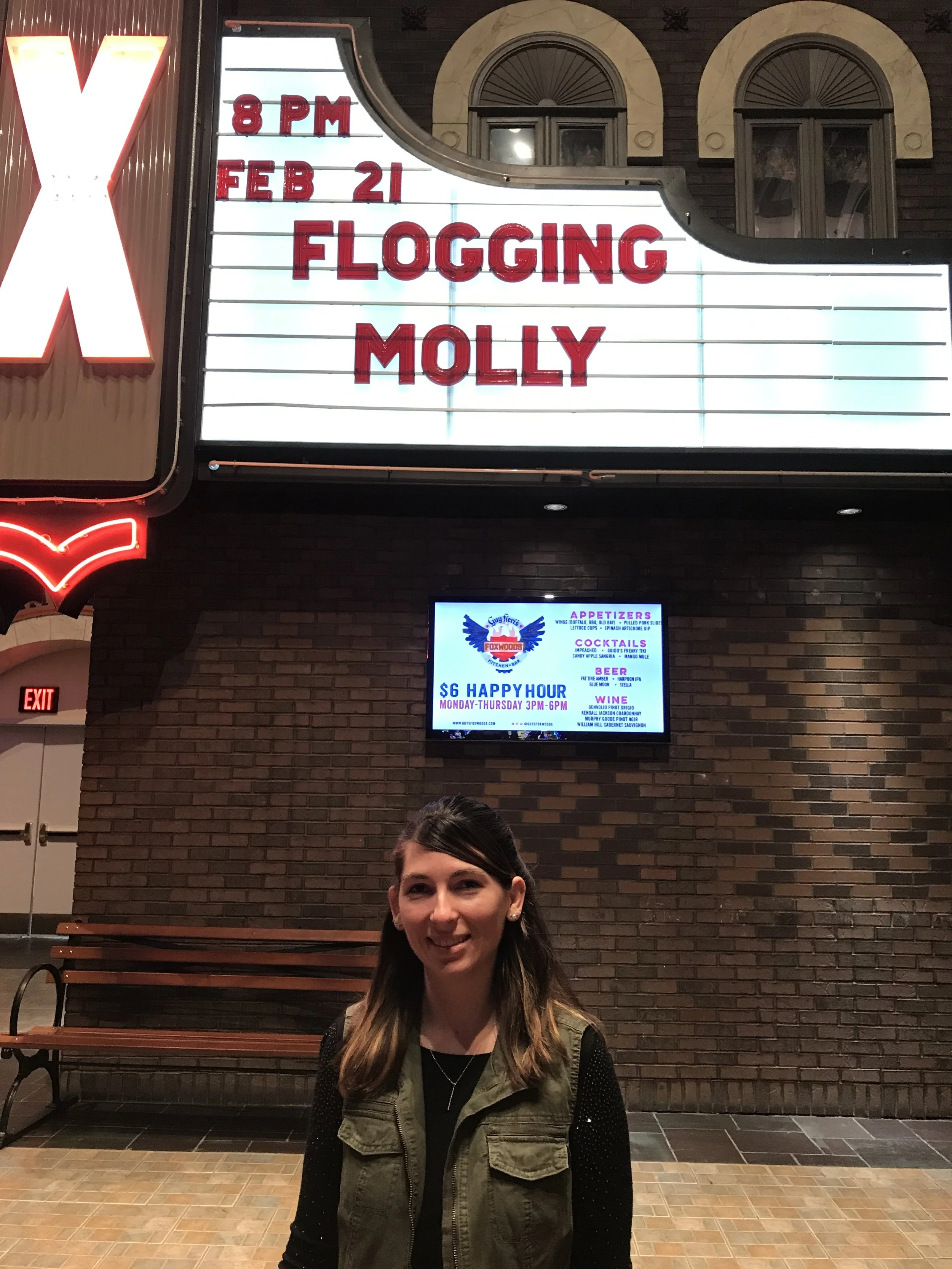
FMME.JPG

I don’t go to concerts often so I’m still learning about what it’s like when I do go. I thought Flogging Molly would be playing all new songs from their new release which I haven’t got around to research the lyrics or play them. While I was sitting at the concert feeling the bass and vibrations, I found myself feeling deja vu. I felt a sense of familiarity in the music.

There were couple years during college when I was homesick so I commuted the 2 hours drive every weekend. This is when I would blast any music in the car since I was alone on open and bare highway. Flogging Molly was played the most often.

So sitting there at Flogging Molly concert brought back those memories and I was surprised that I could recognize feeling the bass and vibrations after years! I was able to identify the song ‘Drunken Lullabies’ when they played it at the concert.

People were surprised when they saw pictures on my social media of me at Flogging Molly. Probably wondered how is that possible for me? Even through I have my hearing loss, I still enjoy the concert in my own way. On top of feeling the bass and vibrations of the songs, I enjoy the visual aspects of the concerts such as lighting, watching them play on their instruments, etc. I also can feel the excitement of concert-goers. At Flogging Molly, I enjoyed being around so many Irish people who were decked out in newsboys caps, Irish t-shirts, and tweed. It created a fun environment for me.

FM.jpg

This blog is not sponsored. All opinions in this blog are my own.

Lipreading: Where Every Sentence Is a Puzzle

The very first question that I get asked every time once someone finds out about my deafness is “can you lipread?” (and yes, they’re verbally asking me this). It’s a misconception that every deaf person knows how to lipread. It’s a skill that is learned. As mentioned in my background blog, I grew up in a mainstreamed setting so I learned how to lipread at a young age.

Lipreading is a difficult skill to learn. It varies on the level of hearing loss and preferred communication method - some deaf people may be experts but some may be lousy. Hearing people often think this is the best method of communication but it is not. I grew up in a mainstreamed setting so I use simultaneous communication - speech and sign language as my main method of communication with my family and friends. Signing is the easiest method of communication but I also use speech to help them understand me more since they don’t know EVERY word in sign language. I understand everything when they use sign language with me.

I lipread a little when I’m interacting with strangers in public like at the stores, appointments, etc. If I am aware of what the conversation will be about, I have the ability to lipread most of what is being said. For example, if I go into a coffee shop — I know they will be asking me what size cup, what kind of milk, do I want this added in the drink, etc. It throws me off if they started a conversation that is not topic-related. Often, I would panic and wonder “what are they saying?”. It will take me a few minutes to try and figure out what is being said.

Many people have asked me if it makes a difference if I’m in a one-on-one dialogue vs a group setting discussion. Either way, I am only able to catch a few words from the entire conversation. The benefit of having 1:1 conversation is that I am able to focus on one person and I can ask them to repeat if necessary. Forget it with a group setting! I never catch anything from multiple people talking and they don’t always directly look at me (which helps me to lipread). It is extremely difficult and most of the time I leave those groups wondering what the discussion was about.

One issue that I have faced while trying to lipread a stranger in a public setting is that they get annoyed with me when I ask them to repeat or gesture. They either give up or cut the conversation short. So many people do not realize that lipreading is a substantial task for deaf people. It really requires us to put in a LOT of effort. In the end, I always feel guilty for any miscommunication that happens which isn’t always my fault. I try to ask people to write since that is better than lipreading.

You wouldn’t believe the misunderstandings that can happen from attempting to lipread! When I’m in a dialogue with a stranger, I am likely to catch a few words so I play the whole “fill in the blank” game. There have been some assumptions where I was entirely wrong and made the situations very awkward!

How long does it take me to lipread a new person that may come in my life? I am almost always the only deaf person at my job. How do I communicate with my hearing co-workers? I do have to lipread most of them. It is always challenging when I work with new co-workers. It does help when I see them daily and practice lipreading them. It takes me about a month and a half (of seeing them daily) to be able to lipread the majority of what they are saying but I do still occasionally miss some words.

Many people also don’t realize there are things that can prevent me from lipreading! One time at work, we lost power so we were in complete darkness. A co-worker started talking to me but I couldn’t see their lips in the dark! There have been some men that I wasn’t able to lipread because of their mustaches or beards. I can’t read lips when they’re covered with facial hair. It can be very distracting to lipread when someone has objects in their teeth/mouth or any kind of deformity around their mouth.

Accents also prevent me to lipread since people pronounce their words differently. I’ve traveled to Ireland twice where I’ve met many friends. They all spoke English but pronounced their words differently so I wasn’t able to lipread. I have came across New Englanders with strong Boston accents, which again I can’t lipread. I wasn’t raised in Boston so I never learned their pronunciations.

In the end it’s best that you do not assume that all deaf people can lipread. Don’t be afraid to ask them what their preference method of communication is. Most of the time it will be writing on paper or gesturing. Of course it’s most helpful if you know sign language!

All opinions in this blog are my own.

Growing up Deaf

One of my hopes with this blog is to broaden the awareness of deafness. I will be sharing what it's like being deaf. All opinions and experiences in this blog are my own, it does not reflect the opinions or experiences of other deaf people.

Throughout my life I have met many people curious about my deafness, most often these are people who have never know a deaf person or who have had only limited exposure to the deaf community. I encourage people to ask me questions, because I want to bring awareness of deafness into main stream culture. I hope you can learn from me and feel free to email me your inquiring questions! 

Let's start with the background of my deafness. I was born with profound hearing loss with no history of deafness in the family. My parents, brother, grandparents, and relatives are hearing. I use simultaneous communication (sim-com) with sign language and spoken English as my main communication method.

I was born in New Jersey so I lived there for the first few years of my life. When I was 6 months old, my parents noticed that I was not responding to sounds so they brought me to a doctor. The doctor stood adjacent to me and clapped his hands. Naturally I reacted by looking at him, he said “nope, she’s fine.” My parents brought me home with doubts in the back of their minds. When I was 9 months old, we visited family in Upstate New York. This is when they expressed the concerns to my aunt who was a college student majoring in speech therapy. My aunt scheduled a hearing test which this is where my parents were told that I am deaf. The people who did the testing did not want to commit to the level of my hearing loss so they suggested my parents schedule a testing with audiologist. My parents took me to an audiologist in Philadelphia, Pennsylvania. The audiologist confirmed my hearing loss but said the hearing loss was only moderate. I was fitted with hearing aids that suited that level.

My parents began to research schools for me to attend, two schools came highly recommended: Helen Beebe Speech and Hearing Center in Easton, PA and Summit Speech School in New Providence, NJ. Both of these had focuses on auditory/oral education. It was decided that I would go to Summit Speech School since it was 45 minutes closer to my home. I went there three times a week for 1:1 sessions. The staff worked with me to pronounce sounds.

While I attended Summit Speech School, they had suspicions that my hearing loss was greater than what my parents were told. They recommended to get another hearing test. My parents took me to Beth Israel Medical Center in Newark, NJ. It was discovered then that I had profound hearing loss! I was fitted with another hearing aid that was suited better for profound hearing loss.

My parents and I moved to Upstate New York to be closer to family. My parents felt the stress and uncertainty of raising a deaf child so they wanted the support of the family. I went from Summit Speech School in NJ to a program at Elmira College. The only difference was that Elmira College used “total communication” - usage of both spoken English and sign language. This is when I learned sign language. My parents had hesitancy about me using sign language because Summit Speech School told them that it was bad! Fortunately, I never dropped the speech part. My parents started taking sign language classes shortly after so they can communicate with me.

I grew up the majority of my life in Upstate New York. I attended a mainstreamed school. I was the only deaf student with no pre-existing conditions. I had a support team that consisted of a Teacher of the Deaf, interpreter, and a note taker. A deaf community was nonexistence during my childhood because all of my peers attended school for the deaf 2 hours from my home. Before you ask why didn’t I go to the deaf school too… I promise a future blog post about it.

After high school graduation I attended the deaf college, National Technical Institute for the Deaf (NTID), at Rochester Institute of Technology in Rochester, NY. This is when I finally was able to be a part of the deaf community. Those years in Rochester probably were the most challenging time in my life discovering myself as a deaf individual. It taught me a lot about finding my place in this world.